Why Your Bright Leggings Look Different in the Gym Mirror Than at Home
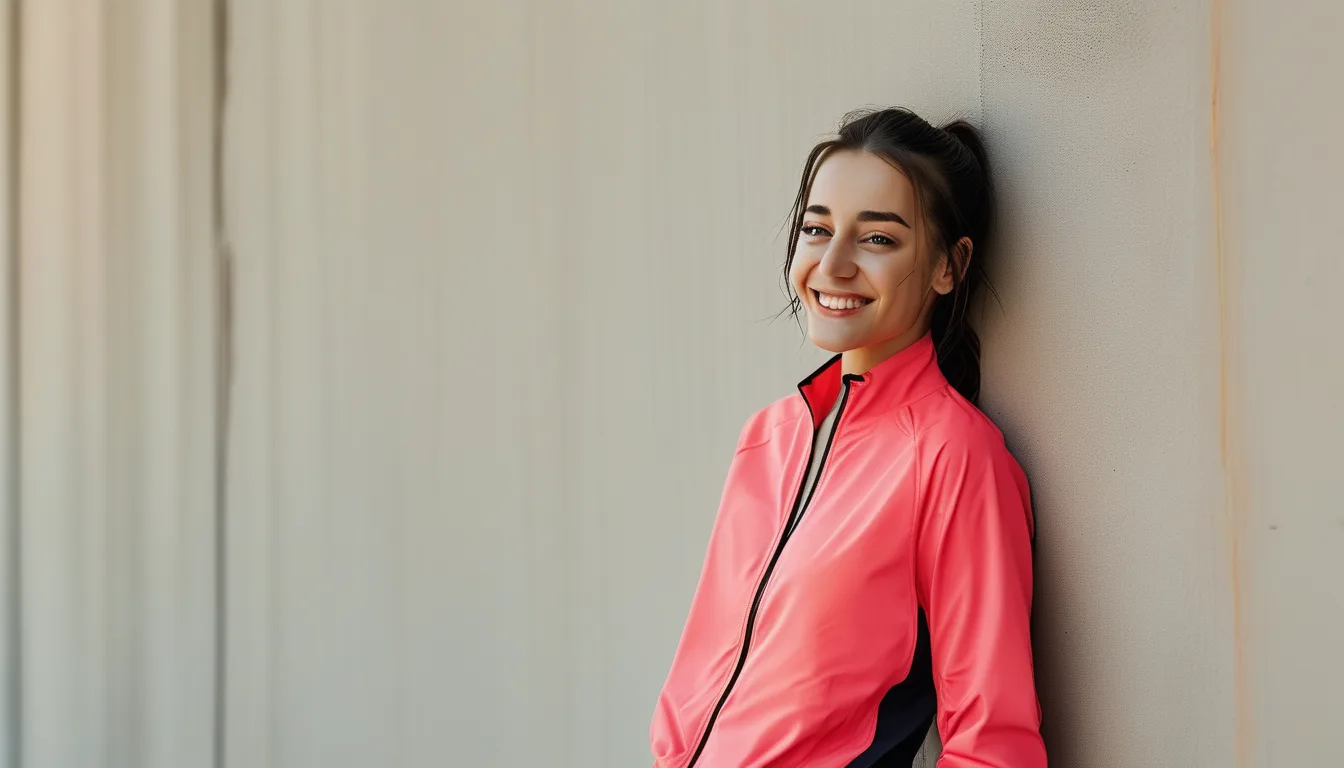
Quick Answer: Gym lighting is usually cool-toned LED or fluorescent with a high colour temperature, which suppresses warm tones and amplifies cool ones. Corals and warm reds go flat and muddy, while blues, teals, and cool greens intensify. Daylight at home shows the true colour. If you want a bright that looks good in both, choose one with a slight cool bias - the warm-toned brights are the ones that reliably disappoint under gym lights.
You loved the coral leggings in the bedroom mirror. Then you caught yourself in the studio mirror and they looked dull, slightly grey, and nothing like the colour you paid for.
Both mirrors are honest. They are just being lit by two very different light sources.
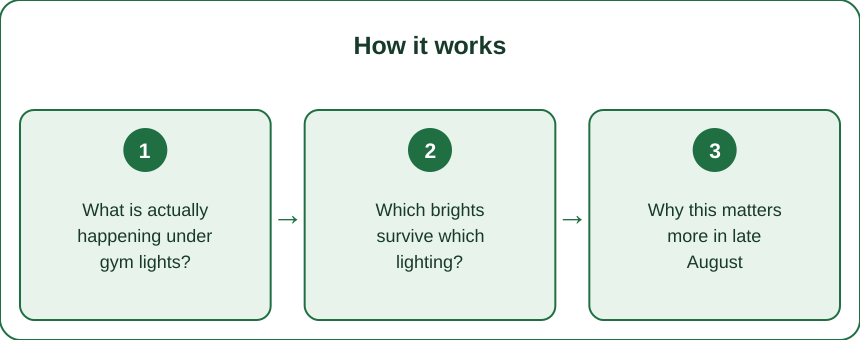
What is actually happening under gym lights?
Light sources do not contain all colours equally, and fabric can only reflect what falls on it.
Daylight contains a fairly even spread across the visible spectrum, which is why colours look accurate outdoors and near a window. Most artificial lighting does not.
Gyms and studios generally use cool white LED or fluorescent lighting in the 4000K to 6500K range, chosen because it looks clean, bright, and alert. That light is weighted toward the blue end and comparatively poor in the warm red and orange region.
A coral legging is coral because it reflects orange-red wavelengths. If those wavelengths are barely present in the room, there is nothing for it to reflect, and what returns to your eye is a duller, greyer version of the colour.
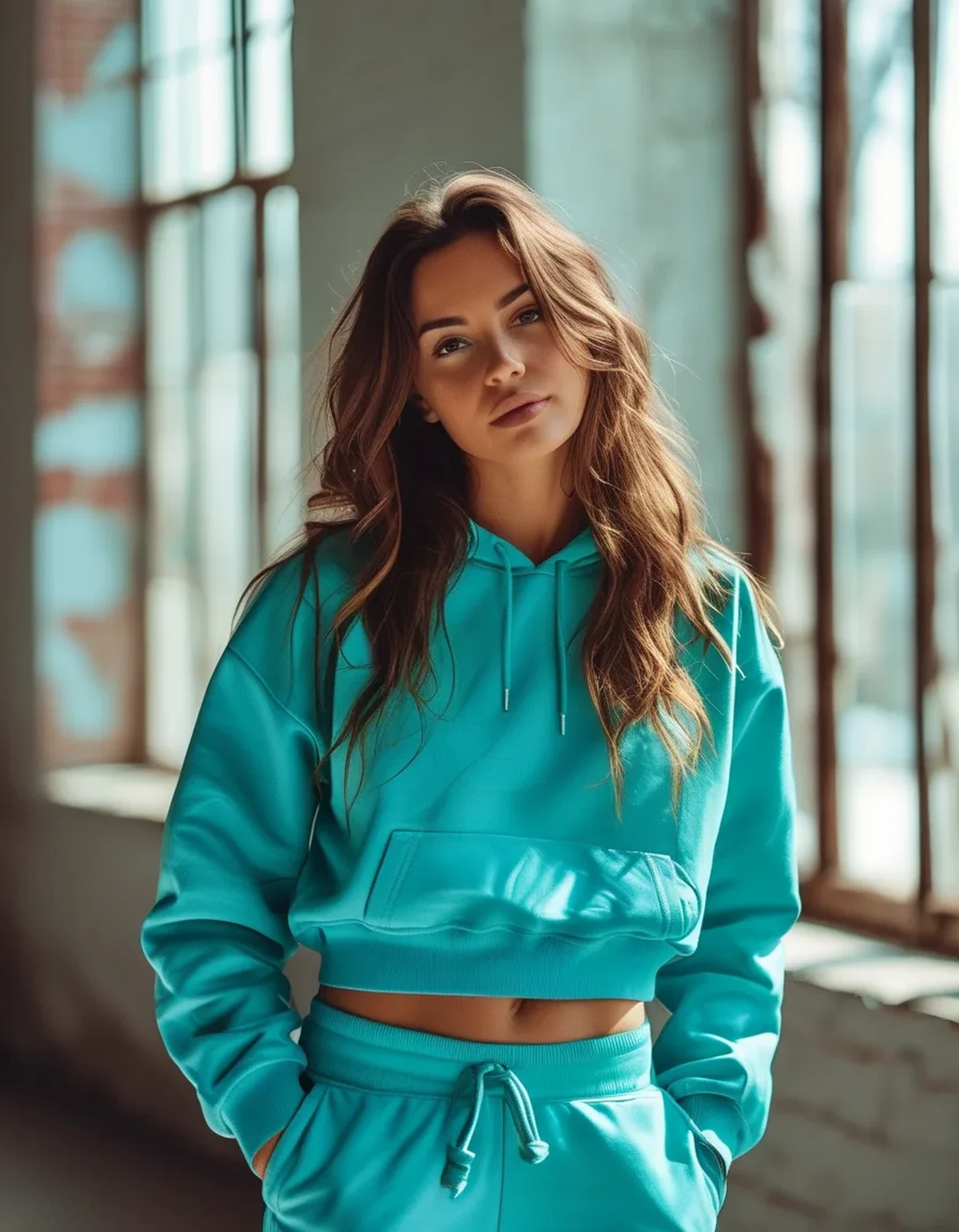
A teal legging under the same light is being handed exactly the wavelengths it reflects best, so it looks more saturated than it does at home.
There is a second factor called colour rendering - a measure of how faithfully a light source shows colours compared to daylight. Cheaper commercial lighting often scores poorly, which flattens everything slightly regardless of hue.
Which brights survive which lighting?
A rough guide, based on where each colour sits relative to typical gym lighting:
Perform well under cool gym light: teal, cobalt, cool bright greens, purple, cool pinks (the blue-leaning ones), bright white.
Perform poorly: coral, peach, warm reds, orange, mustard, warm yellow-greens. These are the colours most likely to look markedly better at home than at the gym.
Perform differently but not worse: neon shades. Fluorescent brights contain optical brighteners that respond strongly to the blue and ultraviolet content of some lighting, which is why certain neons look almost lit-from-within under gym lights and normal outdoors.
Neutral: black, charcoal, navy. These are unaffected in the sense that there is little chroma to lose, though blacks can look slightly washed under very cool lighting.
If you train outdoors, invert the whole list - warm colours come alive in low-angle late-summer daylight, particularly in the golden hour when the light itself is warm.
The practical conclusion: buy warm brights for outdoor training and daytime wear, and cool brights for the studio.
Why this matters more in late August
Because the light outside is changing at the same time you are moving more sessions indoors.
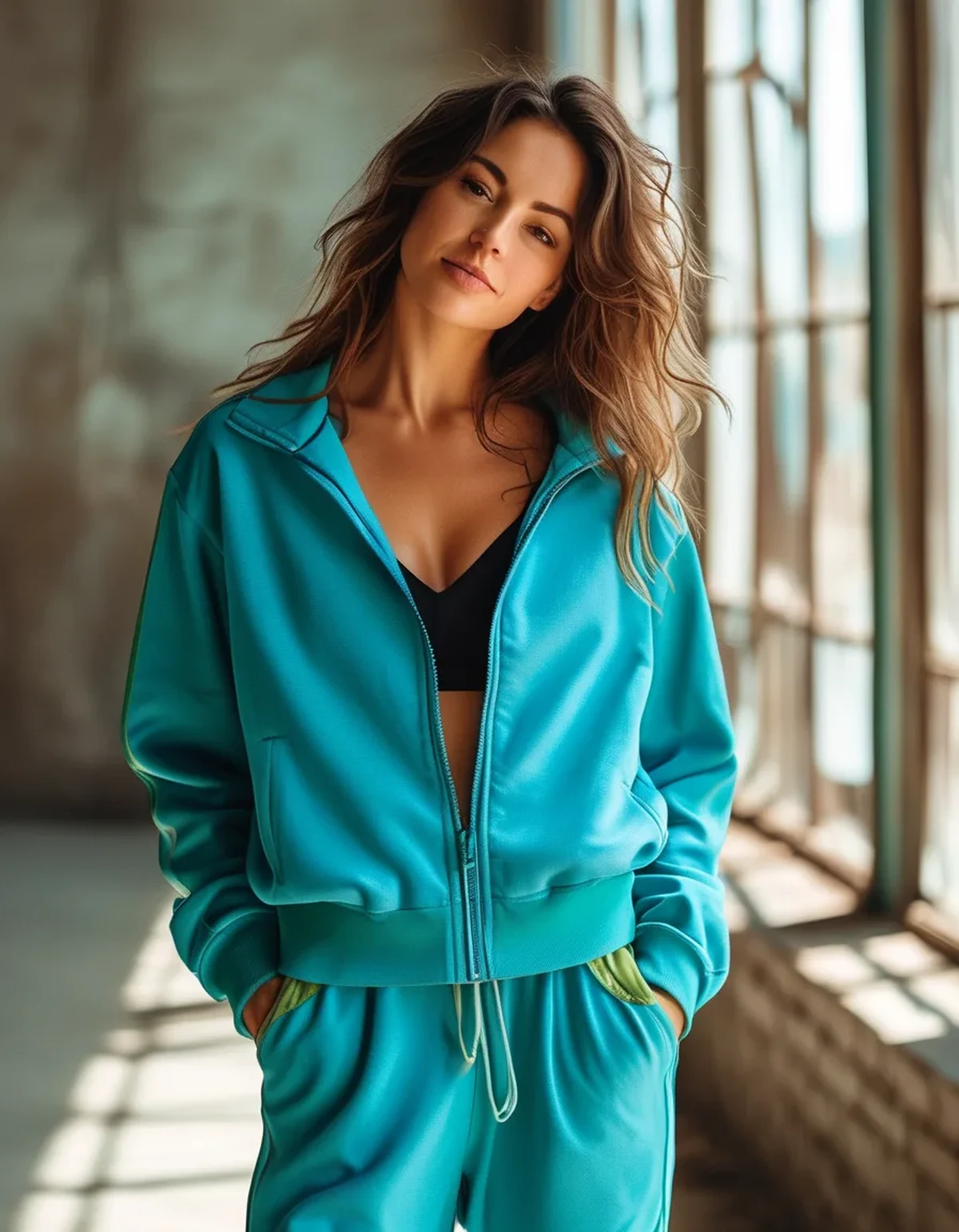
Late-summer daylight is lower-angled and warmer than midsummer light, which flatters warm colours - the corals and rusts that look muddy indoors look genuinely good outside right now. That is part of why an outfit can seem to change character depending on where you got dressed and where you are going.
At the same time, evening sessions are moving back indoors as it gets dark earlier. So the same legging you wore for a 7pm outdoor run in July is now being seen under studio lighting.
There is also a photography angle. If you take progress photos or post anything, the light source is doing much of the colour work. A photo in a gym under cool light and one at home near a window will show what looks like two different garments, and neither is the camera’s fault.
None of this means you need a wardrobe sorted by light source. It does mean that when a colour disappoints in one setting, the answer is usually the room rather than the purchase.
Myth vs Fact: Colour and Lighting
Myth: The mirror at the shop is deliberately flattering. Fact: Sometimes, but the bigger effect is genuine lighting design. Retail lighting is typically warmer and higher in colour rendering than gym lighting, which makes most colours look richer. It is not a trick so much as a different light source.
Myth: A colour that looks bad under gym lights is a bad colour. Fact: It is a badly matched colour for that room. The same legging outdoors on a September afternoon can look excellent.
Myth: You can correct for this by adjusting your phone camera. Fact: Automatic white balance tries to, and it usually overcorrects, particularly in mixed lighting. Manual white balance or shooting near a window works better than filtering afterwards.
Myth: Faded activewear is the same as poorly-lit activewear. Fact: They look similar and they are not. Check the colour in daylight - if it looks fine near a window, the problem was lighting. If it looks dull there too, the dye has genuinely faded, which is usually a washing and drying issue.
Myth: Expensive activewear does not do this. Fact: Physics applies equally to every price point. What better dyes provide is depth and fade resistance, not immunity to the light source.
FAQ: Activewear Colour Questions, Answered
How do I check a colour properly before buying?
Look at it in daylight - by a window or outside the shop door if possible. Daylight is the reference standard, and it tells you what the colour actually is rather than what a particular room is doing to it.
Why do my black leggings look brown-ish at the gym?
Usually a combination of very cool lighting and slight dye fade. Black fabric fades toward brown or grey with washing, and cool lighting exaggerates it. Compare to a newer black item in daylight to tell the difference.
Do the same rules apply to skin tone?
Broadly yes - cool gym lighting tends to flatten warm skin tones and can make everyone look slightly washed out. It is another reason the studio mirror is a poor place to judge how anything looks.
What colour is safest if I train in several places?
Cool-leaning brights - teal, cobalt, and blue-based pink - are the most consistent across daylight and cool artificial lighting. If you own one bright pair for everything, that is the range to buy in.
TL;DR:
- Gym lighting is cool-toned and low in warm wavelengths, so warm colours have nothing to reflect.
- Corals, peaches, and warm reds go flat and grey indoors; teals, cobalts, and cool pinks intensify.
- Daylight is the reference. Judge any colour near a window, not in a studio mirror.
- Late-summer daylight is warmer and lower-angled, which is why warm brights look best outdoors right now.
- Dull black usually means fade plus cool lighting - compare against a newer black item in daylight.
- For one pair that works everywhere, buy a cool-leaning bright.
The leggings you liked at home are still the colour you liked. The studio is just showing you a version of them with the warm half of the spectrum removed.
See It in Motion
Seen here: High Waist Yoga Leggings with Side Pockets — shop it on bubblelime.com
Keep Reading
This article is for general informational and styling purposes only. Fit, sizing, and product availability may vary.