Which Bright Activewear Colors Actually Flatter Your Skin Tone (There's a Real Answer)

Quick Answer: Warm undertones glow in coral, tomato red, and warm orange-toned brights; cool undertones look best in true blue, fuchsia, and emerald; neutral undertones can wear almost any bright but do especially well in true red and jade. Check the veins on your wrist for a quick undertone read.
You’ve bought a ‘universally flattering’ bright before and had it sit in the drawer because it just looked off against your skin. That’s not a styling failure — it’s an undertone mismatch, and it’s fixable once you know your category.
How do you actually find your undertone?
Check your wrist veins in natural light. Green-ish veins usually mean warm undertones; blue or purple-ish veins usually mean cool undertones. If you genuinely can’t tell, you’re likely neutral, which is good news — more colors work for you.
A second check: does silver or gold jewelry look better against your skin? Gold typically flatters warm tones, silver typically flatters cool tones.
What bright colors work for warm undertones?
Coral, tomato red, warm orange, and golden yellow tend to make warm undertones look sun-kissed and energized rather than washed out. These colors have a yellow base that harmonizes with warm skin’s natural undertone.
Avoid icy blues and stark fuchsia — on warm undertones these can read as slightly harsh rather than vibrant.
What bright colors work for cool undertones?
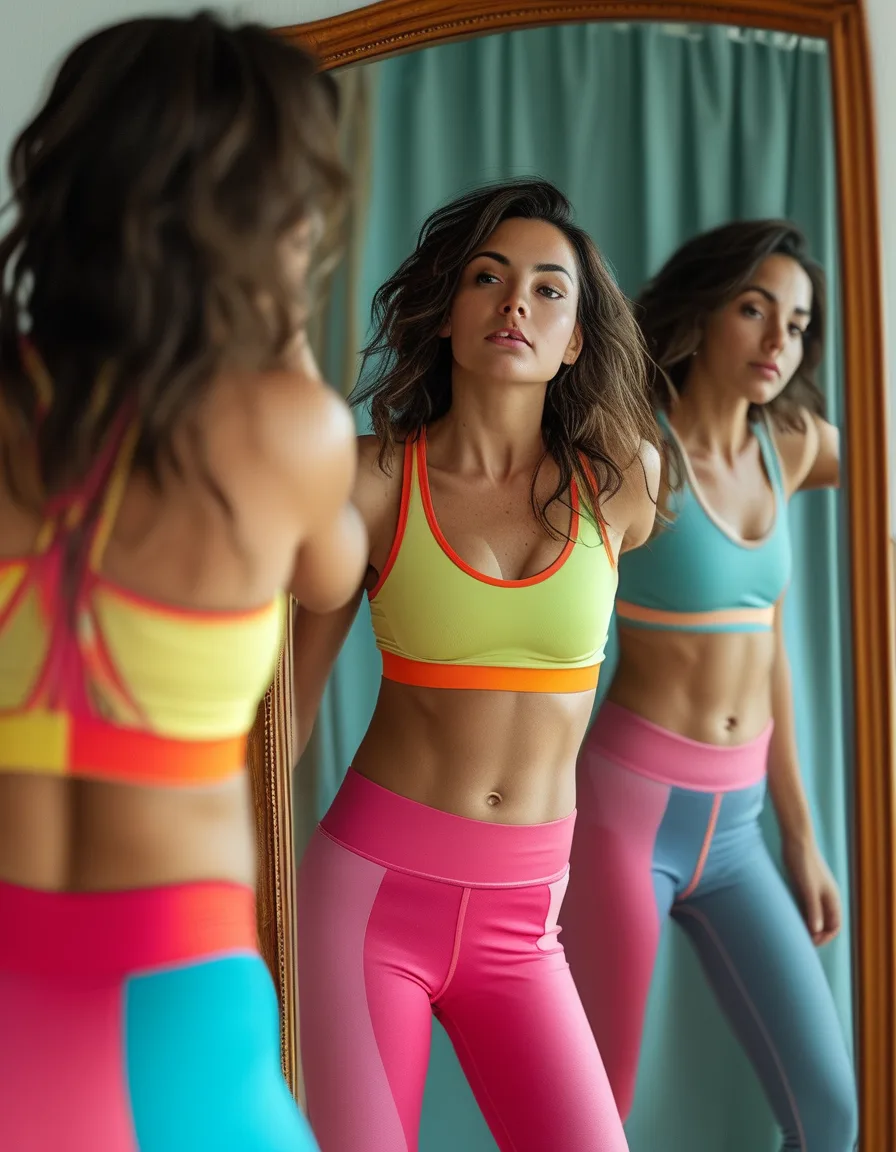
True blue, fuchsia, and emerald green tend to make cool undertones look brightened rather than sallow. These colors have a blue base that complements cool skin’s pink or blue undertone.
Warm oranges and yellow-golds can sometimes clash slightly, reading dull against cool skin rather than vibrant.
Myth vs Fact: Bright Colors and Skin Tone
Myth: Bright colors only work on certain body types. Fact: Brightness has nothing to do with size — it’s entirely about undertone matching, which applies at any size.
Myth: Neutral undertones can wear literally anything equally well. Fact: Neutrals have more flexibility, but true red and jade tend to test as the most universally flattering even within that group.
Myth: You need to match your top and bottom brightness exactly. Fact: One bright piece with a neutral counterpart (black, white, gray) usually reads more intentional than two competing brights.
FAQ: Bright Activewear and Skin Tone Questions, Answered
Can I still wear a color that doesn’t match my undertone?
Yes — undertone matching is a flattery guideline, not a rule. If you love a color, wearing it near your face (a bright sports bra vs. bright leggings) matters more than avoiding it entirely.
Does this change with tan skin in summer?
Undertone stays the same even as your overall skin tone darkens with a tan — the same warm or cool guidance still applies.
What’s the safest bright for testing this at home?
True red is the closest thing to universally flattering across both warm and cool undertones, making it a good first bright to test.
TL;DR:
- Check wrist veins to identify warm, cool, or neutral undertone
- Warm undertones glow in coral, tomato red, and warm orange
- Cool undertones glow in true blue, fuchsia, and emerald
- True red tests as close to universally flattering if you’re unsure
The ‘right’ bright isn’t about trend — it’s about undertone, and once you know yours, shopping for activewear gets a lot faster.
Keep Reading
This article is for general informational and styling purposes only. Fit, sizing, and product availability may vary.