How to Wear Bright Activewear Without It Looking Like You're Trying Too Hard

Quick Answer: Bright activewear reads as intentional rather than overdone when it’s balanced by neutral pieces elsewhere in the outfit — one bright statement piece (not two or three at once) paired with black, white, or gray keeps the look confident instead of chaotic.
You bought the bold color because it looked great on the model, but wearing it head-to-toe (or paired with another bright piece) can tip into looking like you’re trying too hard rather than like you meant to do that.
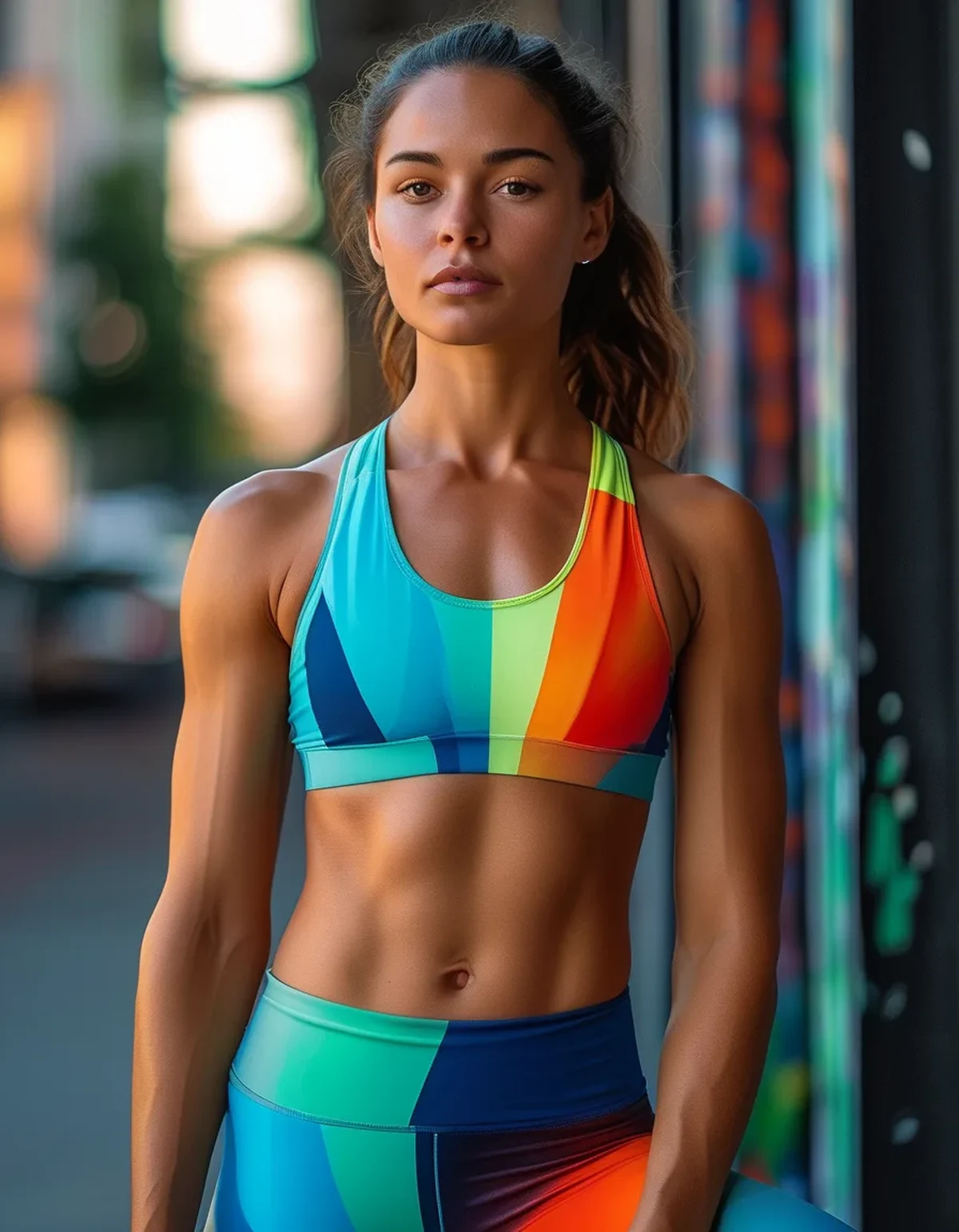
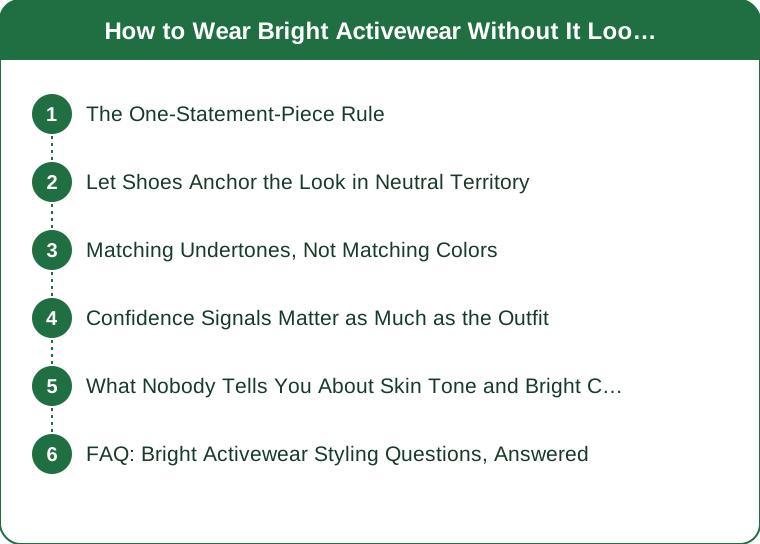
The One-Statement-Piece Rule
Choose either a bright top or bright bottom, not both, and let the other piece stay neutral — this single rule solves most ‘trying too hard’ bright-color outfits without requiring any additional styling knowledge.
Let Shoes Anchor the Look in Neutral Territory
White, black, or gray sneakers ground a bright outfit and keep the eye from having too many competing bright points — save colorful sneakers for outfits that are already neutral-based.
Matching Undertones, Not Matching Colors
A bright color doesn’t need to be ‘matched’ by another item in the exact same shade — instead, look for undertone harmony (warm-toned brights pair well with other warm neutrals like camel or cream, cool-toned brights with gray or white).
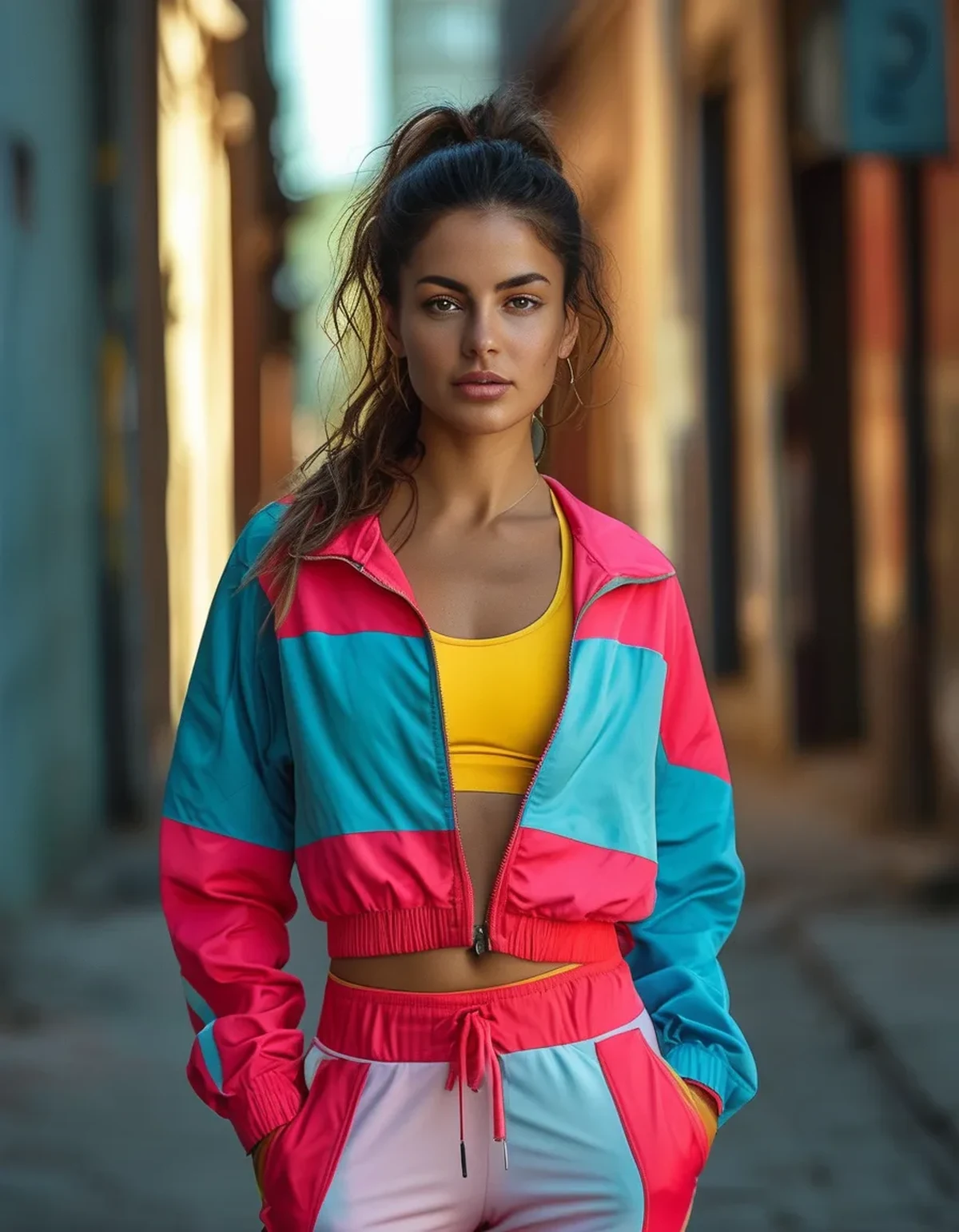
Confidence Signals Matter as Much as the Outfit
Bright colors read as ‘trying too hard’ partly based on body language — pairing a bold outfit with relaxed, confident posture and accessories reads intentional, while an outfit that seems to be apologizing for itself reads as uncertain regardless of color choice.
What Nobody Tells You About Skin Tone and Bright Color Choice
Not every bright shade flatters every skin tone equally — testing a bright color near your face (even just holding the item up) before committing to a full outfit helps you choose the brights that read as vibrant rather than washing you out.
FAQ: Bright Activewear Styling Questions, Answered
Can I wear two bright colors together if they’re from the same color family?
Generally yes — two brights within the same family (say, coral and orange) read as coordinated, while two unrelated brights (coral and cobalt) often compete for attention instead.
Is it ever appropriate to wear a fully bright, head-to-toe activewear set?
Yes, for high-energy contexts like a race or a bold fashion moment specifically, but it’s a look best saved for occasions where it’s clearly a deliberate style choice rather than everyday wear.
Do accessories need to match the bright color too?
No — neutral accessories (a black bag, white sneakers) usually work better than trying to match or complement the bright color exactly.
TL;DR:
- One bright statement piece, balanced by neutral pieces, reads intentional
- Neutral shoes anchor a bright outfit rather than competing with it
- Match undertones, not exact colors, for a coordinated look
- Confident body language matters as much as the color choice itself
Bright activewear works best as a deliberate accent, not an all-over statement — restraint elsewhere in the outfit is what makes the bright piece actually pop.
Keep Reading
This article is for general informational and styling purposes only. Fit, sizing, and product availability may vary.